
- Biochar Carbon Removal & Carbon Credit Solutions
Turn Biochar into a Long-Term Carbon Removal Asset
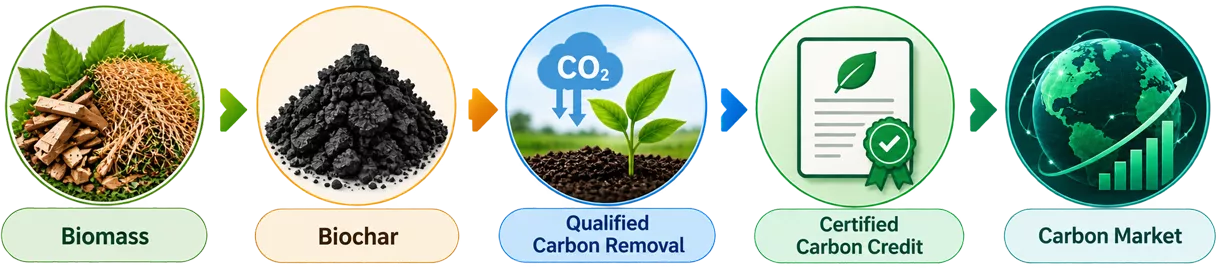
From Biomass Waste to Biochar. From Biochar to Carbon Removal.
The transition towards a low-carbon economy is creating a new opportunity for biomass producers, industries and biochar manufacturers.
Biochar can potentially convert biomass-derived carbon into a durable carbon storage asset.
Manglam Gasifier helps project developers and industrial customers explore this opportunity by combining:
01
Biomass Conversion Technology
02
Biochar Production
03
Carbon Accounting
04
MRV
05
Carbon Credit Development

What is Biochar Carbon Removal?
Plants absorb atmospheric CO₂ through photosynthesis as they grow.
When eligible biochar is subsequently placed in an approved and appropriately documented end-use pathway, part of that carbon can remain stored for a long period.
When biomass is converted into biochar, a portion of this carbon is transformed into a relatively stable carbon-rich material.
This creates a potential Carbon Dioxide Removal (CDR) pathway.
High-quality biochar carbon-removal methodologies focus on factors such as responsible biomass sourcing, biochar quality, production emissions, transport, end use, monitoring and durability. Puro.earth’s current biochar methodology, for example, targets several-centuries durability, while Verra’s VM0044 quantifies removals from qualifying waste-biomass-to-biochar projects.
How Does the Biochar Carbon Credit Business Work?
A biochar project can potentially generate two independent value streams:
1. Biochar Product Revenue
The physical biochar can be sold into suitable markets such as:
- Agriculture
- Soil amendments
- Industrial applications
- Construction materials
- Environmental applications
2. Carbon Removal Revenue
Subject to eligibility, certification and verification, the carbon-removal attributes associated with qualifying biochar can potentially be converted into tradable carbon-removal credits or certificates.
Therefore:
Start Your Biochar Carbon Project
Send us the following information:
Pyrolysis is a thermochemical conversion process in which biomass is heated under controlled oxygen-deficient conditions.
The biomass is converted into:
01
Biomass type
02
Biomass availability – tonnes/day or tonnes/year
03
Moisture content
04
Current biomass utilization/disposal method
05
Biochar production
06
Existing thermal-energy requirement
07
Proposed biochar application
08
Project location
09
Existing plant details, if applicable
Manglam will evaluate:
- Best Suited Technology
- Biochar Yield
- Energy Output
- Carbon-Removal Potential
- MRV Requirements
- Project Economics
Want Us To Reduce Your Fuel Cost?
Contact Customer Support
