
- Advanced Biomass Conversion Solutions by Manglam Gasifier
Biochar Generation Technology
Convert Biomass Waste into Biochar, Renewable Energy & Carbon Removal
At Manglam Gasifier, we provide advanced biomass conversion technologies designed to transform agricultural residues, forestry residues, wood waste and other suitable biomass into valuable products such as biochar and renewable energy. With the right biomass, process conditions and plant configuration, Manglam’s solutions can be designed for high biochar recovery while simultaneously utilizing the energy contained in the biomass.
Our technology portfolio includes two distinct thermal conversion routes:
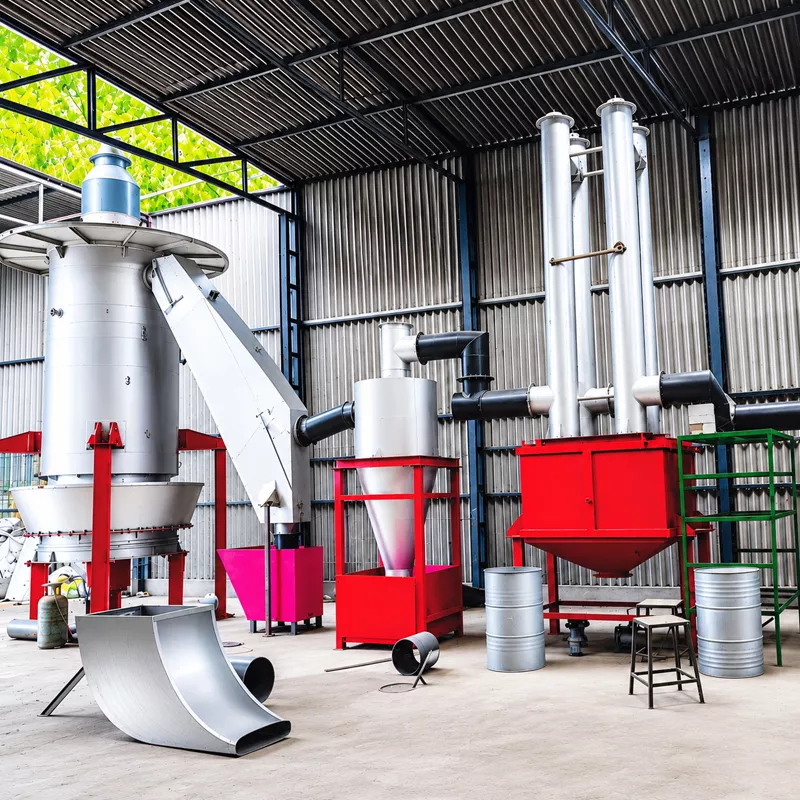

Gasification Technology
Gasification Technology – designed for high-temperature conversion of biomass with controlled air supply, producing combustible producer gas along with a valuable biochar/char fraction.

Pyrolysis Technology
Pyrolysis Technology — designed for controlled thermal decomposition of biomass in an oxygen-deficient environment, producing biochar along with pyrolysis gases and, depending on the process configuration, other valuable products.
Why Biochar?
Biochar is a carbon-rich solid material produced from biomass through thermochemical conversion.
Unlike untreated biomass, biochar can provide a pathway for long-term carbon storage when it is produced from eligible biomass and placed into an appropriate, documented end-use pathway.
Biochar can also create additional commercial value from biomass that might otherwise have limited economic value.
Biochar is increasingly recognized as a durable carbon-removal pathway. Puro.earth, for example, identifies biochar as a leading durable carbon dioxide removal technology and its current methodology targets storage durability of several centuries.
Key advantages
Converts biomass residues into a value-added carbon-rich product
Provides a potential pathway for durable carbon removal
Creates an additional revenue stream from biomass
Can be used in agriculture and soil applications
Can be used in selected industrial and environmental applications
Can reduce open burning and unmanaged biomass disposal
Can generate useful thermal energy during the conversion process
Supports circular-economy and waste-to-value initiatives
- Thermal Conversion Route 1
1. Biomass Gasification Technology
Biochar + Producer Gas + Thermal Energy
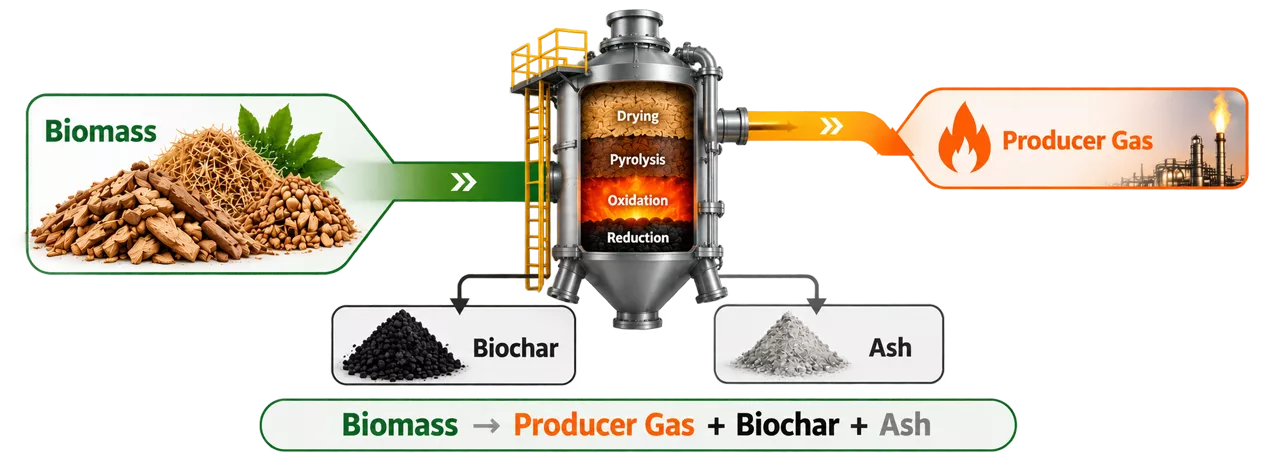
Manglam Gasifier’s biomass gasification technology converts biomass through a controlled gasification process.
A controlled quantity of air is introduced into the gasifier, where the biomass undergoes drying, pyrolysis, oxidation and reduction reactions.
The producer gas can be utilized for industrial heating applications through suitable producer-gas burners and combustion systems.
Biochar Output
- 25%
Manglam’s gasification-based biochar generation systems can be configured to achieve a biochar output of above 25% of biomass input, depending on:
- Biomass type
- Moisture content
- Particle size
- Ash content
- Operating conditions
- Gasifier configuration
- Desired producer-gas quality
- Required biochar characteristics
- Actual biochar yield should be established through biomass testing and plant performance trials.
Ideal Applications
Gasification-based biochar generation is particularly attractive where the customer has:
- Large quantities of biomass residue
- A requirement for process heat
- Existing fossil-fuel consumption
- A requirement for renewable thermal energy
- A requirement to recover valuable biochar
- An interest in carbon-removal opportunities
- Thermal Conversion Route 2
2. Biomass Pyrolysis Technology
High Biochar Recovery Through Controlled Pyrolysis
Pyrolysis is a thermochemical conversion process in which biomass is heated under controlled oxygen-deficient conditions.
The biomass is converted into:
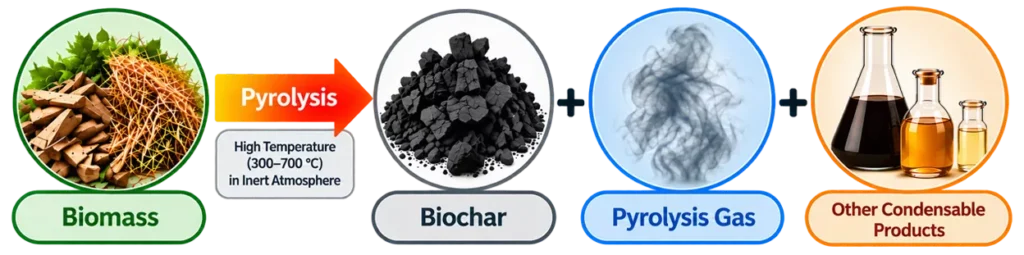
- Depending on the selected pyrolysis configuration and operating conditions, the process can be optimized towards higher biochar production.
Biochar Output
- 30%
Manglam’s pyrolysis-based biochar systems can be designed for biochar output above 30% of biomass input, subject to feedstock characteristics and operating conditions.
The actual yield depends on:
- Feedstock composition
- Biomass moisture
- Particle size
- Reactor temperature
- Residence time
- Heating rate
- Process configuration
- Desired biochar properties
- A detailed biomass analysis and process design study is therefore recommended before finalizing expected production.
Want Us To Reduce Your Fuel Cost?
Contact Customer Support
